At its core, Pilates is a holistic practice that encourages deliberate and controlled movements. It encourages a mind-body connection, attention to muscle control and breathing, and improves mobility, strength, flexibility and functional movement.
Pilates mat work is the most accessible form of Pilates. It is suitable for people of all ages, fitness, and experiences because the exercises can be modified to suit individual needs.
I often include pieces of small equipment that bring a different dimension to the exercises and are a bit of fun!
History of Mat Work
It was developed in the early 20th century by Joseph Pilates under the name Contrology.
In 1915, Pilates was held at Knockaloe Internment Camp on the Isle of Man. As a German civilian in Britain at the outbreak of World War 1, Pilates was an ‘enemy alien’ according to the Aliens Restriction Act, and was arrested and later interned.
It was here he claimed the idea for ‘Contrology’ was born.
He observed the animals around him particularly cats, analysed their movements, and noticed that they would constantly stretch and move. He saw how easily men at the camp could lose strength if they had nothing to keep them active.
He created a series of exercises to stretch the muscles. This included spinal movements, abdominal work, balancing exercises and leg and arm work. These movements later became known as Pilates mat work.
Small Equipment
There are several pieces of small equipment or props that are often used in Pilates classes. They can be used to add resistance to a movement, improve body awareness, support the body, and add a different challenge to a movement.
I incorporate the following pieces into my class; magic circles, small balls, blocks, and resistance bands.
Magic Circle
The magic circle, also known as the Pilates circle or ring, was invented by Joseph Pilates in the 1940-50s. The story goes that he repurposed empty beer barrels to use as apparatus in his gymnasium which left him with the metal ring that encircled the barrel. Not wanting anything to go to waste he added handles made of blocks of wood and used it to help clients with alignment.
The modern magic circle is much more comfortable; it is covered in softer material and has handles that more comfortably fit the hands.
It is often used to add resistance to a movement, encourage shoulder and pelvic stability, and help with alignment. It is incredibly versatile and a fun albeit challenging addition to any class.

Resistance Bands
Using bands, cables or cords to provide resistance to a movement is not a new idea. In the Victorian period there were chest expanders and strandpullers. These would originally have been metal springs with handles, the springs could be pulled to aid in weight training, when more resistance was needed, more springs could be added.
The metal springs were eventually replaced by rubber cables and cords with the first rubberized strandpuller emerging in 1857.
In the United States in 1896, Gustav Gossweiler was granted a patent for a resistance apparatus that was specifically designed for exercise. The cables could be attached to the wall or ceiling via hooks allowing for a greater number of exercises to be performed. In his studio, Joseph Pilates had a set of cables, similar to bungee cords, attached to a wall. Possibly inspired by this earlier apparatus.
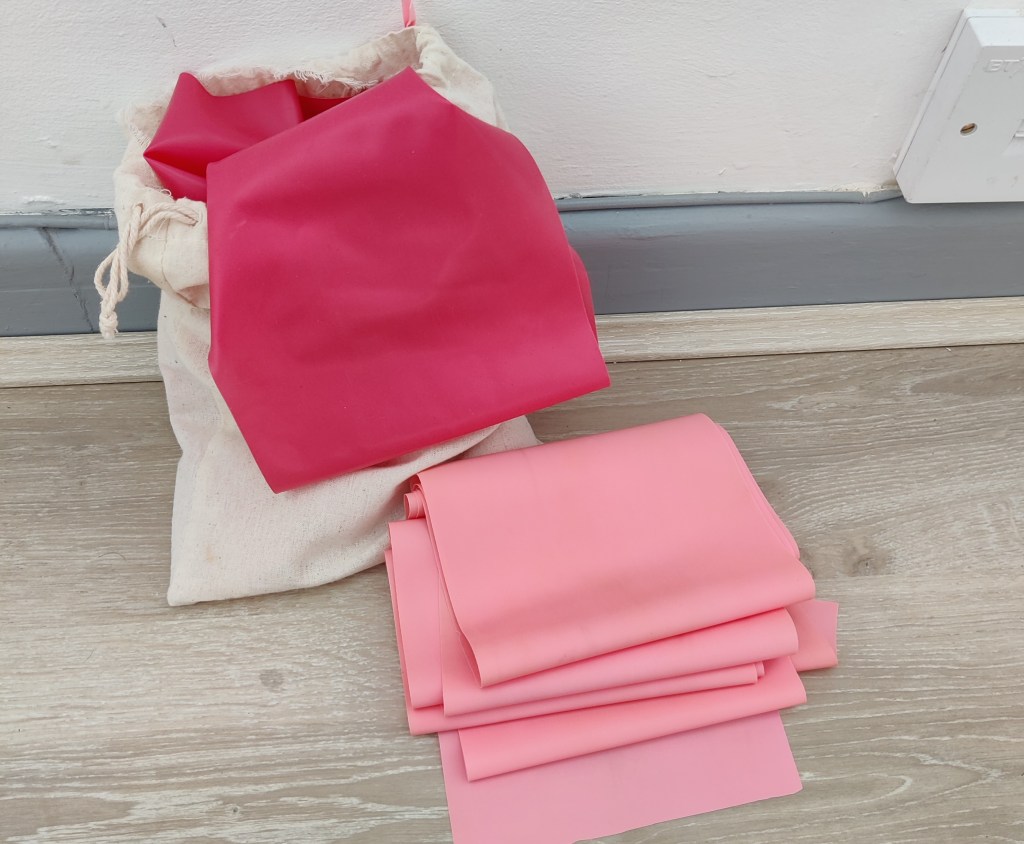
The first elastic based resistance band seems to have been patented in the 1940s though they were not very popular. In 1978 two physical therapists created the TheraBand, a flat resistance band used for rehabilitation. This style of resistance band soon became popular in gyms and exercise classes and eventually found their way into Pilates mat classes.
Modern resistance bands are cheap, easy to transport, and make adding in resistance to a mat based Pilates accessible.
Small Balls
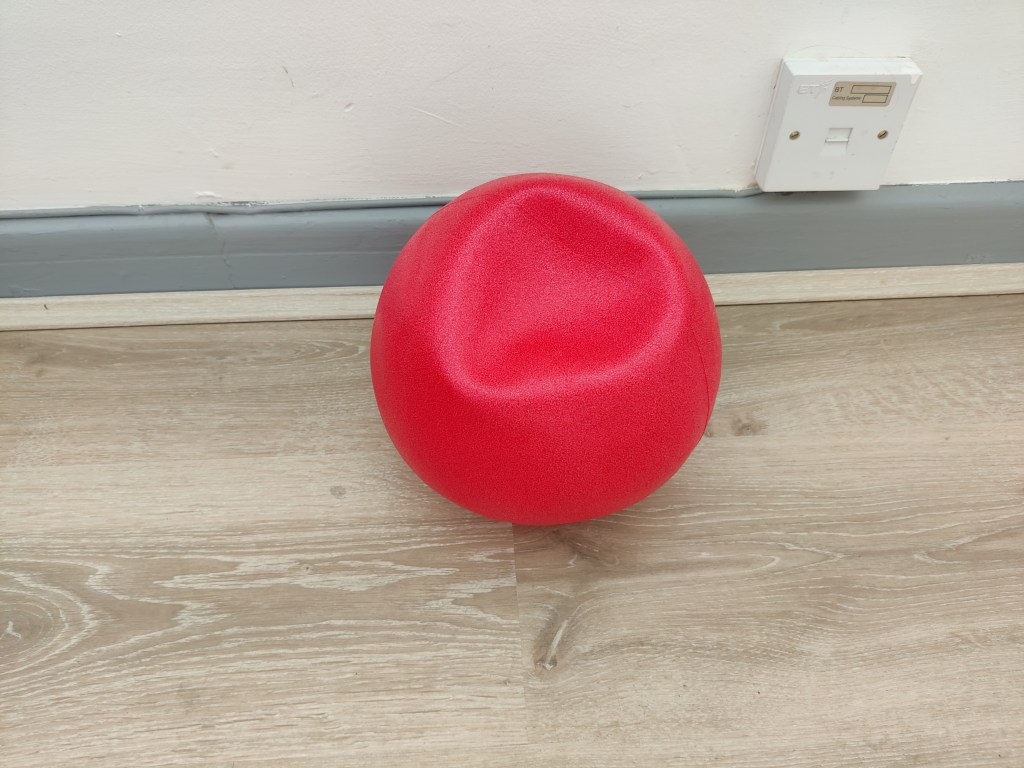
These are small inflatable balls that range from 7-9”. They have a variety of names including overball, Pilates ball, and simply small ball. These were not created by Joseph Pilates though I don’t think he’d mind them being thrown into the Pilates toolbox as he created many other apparatus to aid movement.
It is likely these were introduced to Pilates in the 1960s when inflatable balls were used for physical therapy. It makes sense that something that can challenge stability and balance started being used in Pilates.
They can be used inflated or partially inflated to offer support particularly to the head and neck when in supine, it can help with alignment, add resistance, and improve body awareness.
 Body Align Pilates